
| The End - Chris Snuggs |
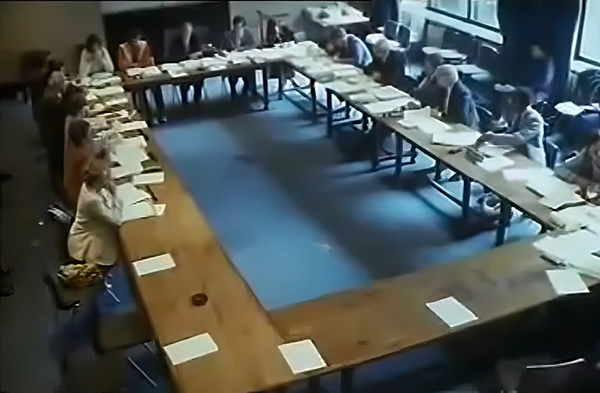
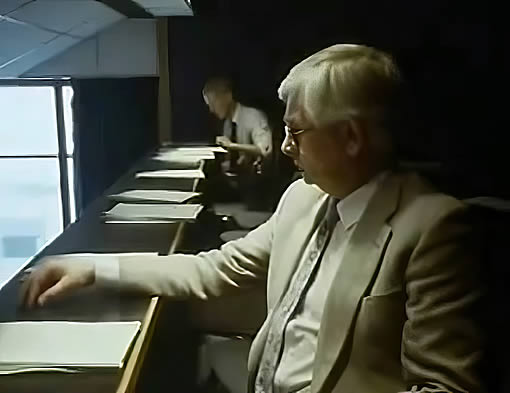
VIDEO: Headmaster Richard Woollett watches as ILEA decides the fate of the school, knowing that its chances of survival are pretty much zero. (video URL) In the event, the school closed on 31 August 1990.
 |
 |
Louis Parperis - Orwell 63-70: “The way in which public monies are allocated and spent has always seemed idiotic to me as it prevents the financial equivalent of cross-pollination. It would be fascinating to know whether the costs subsequently picked up by the Department of Stealth & Total Obscurity for a smaller cohort were, as I suspect, significantly higher than they would have been had the school not been closed, but what that video clip could not reveal was the entrenched views of the school’s many political enemies.”
Chris Snuggs - Berners/Halls 58-64: “In a fair and rational world the DOSATO Louis refers to would have worked out what WHS was saving them and given the school a grant for that sum. We will probably never know the full behind-the-scenes story. It must have been hard for Dick Woollett to watch that live close up. I assume it was in County Hall where I had my interview with John Smitherman early in 1958 I think. No idea who took the video, but it is a remarkable and moving archive.”
Nicholas Craven Brackenbury - Berners 58-65: “I have never seen a report covering annual statistics of GCE 'O' and 'A' level results. We don't know how Woolverstone Hall compared to the Central London comprehensives. I would have gone to Holland Park School. There were, and still are, many dozens of similar schools across London. How do they compare with each other, and with WHS?”
Barry Clark - Hansons 58-65: “At the time around the closure, the figures - I don't have them anymore, but we quoted them to anyone who would listen - demonstrated our GCSE pass rates were 3x that of the ILEA average. My last Double Science class (who had been taught by Colin Howes until the Christmas before the Exam) all got double As. 'A' levels were no longer taken, as we had no sixth form after 1986. I do remember an interview with local TV where I was challenged with the figures that suggested it cost twice as much for a boy to be at WH as it did to send a boy to Eton. I replied by asking the interviewer if he thought the boys would be sent to Eton instead! The figure of course missed the point that the "costs" also represented savings to the council's welfare budgets.”
Roger Friend - Johnstons 58-63: “Nick, when I reintegrated myself with former primary school peers, who went to a variety of schools in Islington, I found that my 'O' level results, poor by Woolverstone standards, were far superior to theirs in every case. And as far as I am aware, no one from my class went to university! Barry’s narrative reinforces my observations with first-hand data. I find it very sad that Woolverstone’s life cycle was cut short by cost. I wonder whether the social cost, which could have been substantial, of closing the school was omitted from the decision calculation!”
Barry Clark: “Hi Roger, most definitely it was. Probably a much longer conversation is need to fully explain it. Several boroughs had worked it out and were offloading (sending) a lot of "social needs" pupils to us. Most of our last few intakes were from the boroughs of Lewisham, Islington and Westminster, who had worked out it was cheaper to offload the costs onto the ILEA. So we had a lot of trips from London by psychologists, and social workers, for instance. DJW and I also attended a lot of case conferences at County Hall, necessitating teaching cover for me and travel costs, as well as DJW having to work on his "off rota" days. But we still worked wonders with them - and they were mostly great kids when given chances. It also meant they were more cohesive as they were from the same estates and primary schools.”
Chris Snuggs: “It was an all round sorry and sad mess, but I always return to my 6th form experience. I did French, German and English at 'A' Level, and the class size was as far as I remember never more than 4 - which really was not sustainable. I wonder if they ever considered recruiting local day boys and girls who would bus in daily as IHS do? We just didn't have the space to take more boarders.”
Barry Clark: “Yes Chris, Under DJW local girls joined the 6th form classes. I wasn't there then, but it may even have been that some boarded in the the Stables area - I think then referred to as the courtyard. I think some staff daughters joined the 6th form, too.”There are a lot of press articles dedicated to this subject here: https://www.whs-archives.net/docs/press/d1.htm